
E-invoicing Reform: What the Evolution of the Public Invoicing Portal Changes
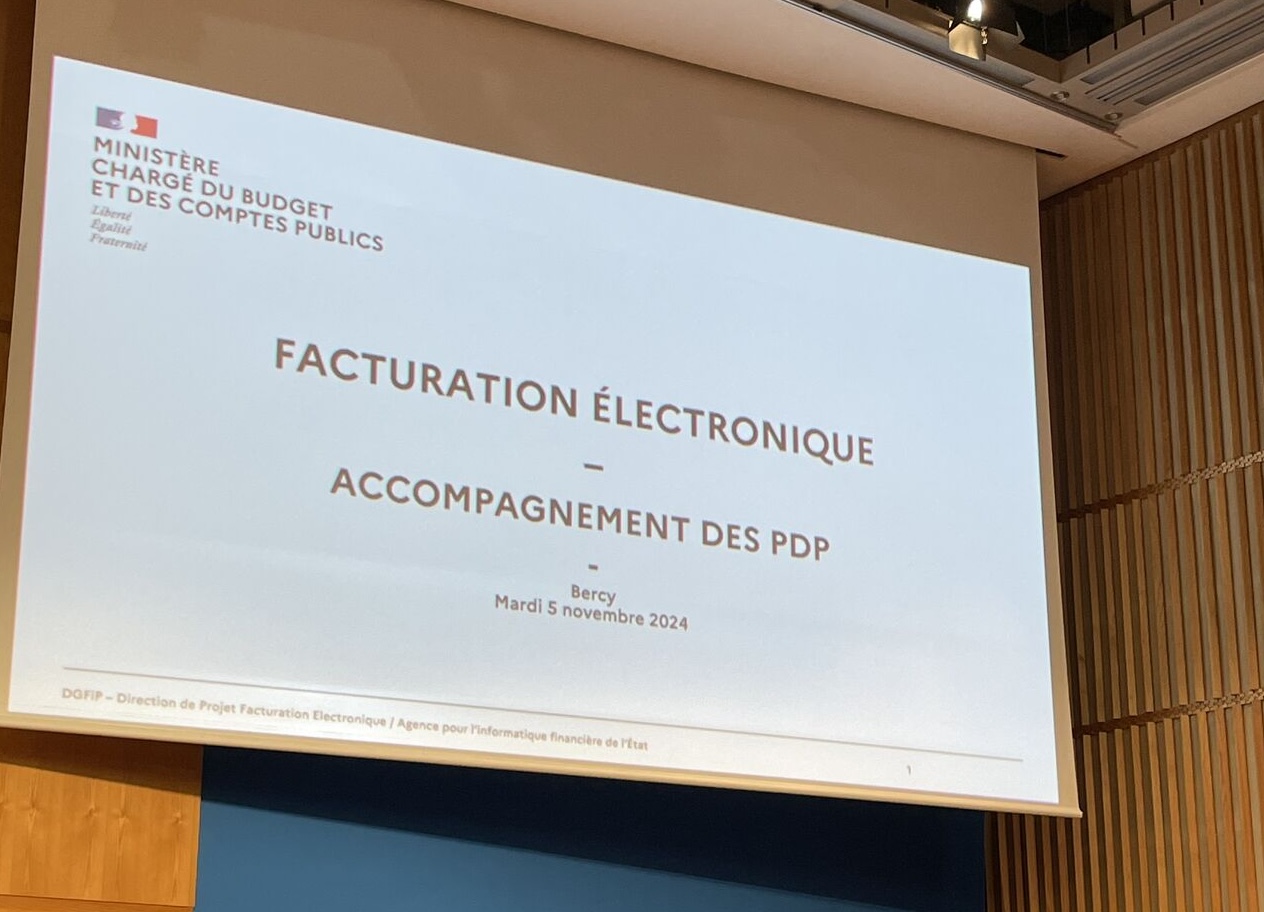
On November 5, 2024, the General Directorate of Public Finance — DGFiP — organized an information meeting for Partner Dematerialization Platforms, now called Accredited Platforms — AP.
This meeting marked an important step in the deployment of the mandatory e-invoicing reform. It followed the announcement of the abandonment of the free invoicing functions of the Public Invoicing Portal — PPF — and clarified the new directions for the system.
For businesses, the challenge remains the same: anticipate compliance, choose a suitable platform, and prepare their invoicing flows before the reform's progressive implementation.
At ICD International, we support businesses through this transition thanks to DEMATRUST, our Accredited Platform dedicated to e-invoicing, as well as a simplified offer for VSEs and SMEs with DEMATRUST Light.
The Public Invoicing Portal is Evolving, but the Reform Remains in Place
The evolution of the PPF does not call into question the overall trajectory of the reform. The DGFiP confirmed that only certain functions of the public portal were affected by this reorientation.
Originally, the Public Invoicing Portal was intended to fulfill three main missions:
- manage the e-invoicing directory;
- centralize invoicing and e-reporting data transmitted to the administration;
- offer a free service for entering, issuing, and receiving invoices.
It is this last function, the free invoicing portal, that has been abandoned. The State will therefore not offer a free invoicing solution for private businesses.
This decision is primarily due to the project's complexity, development costs, and successive delays. However, the directory and the role of data concentrator remain essential pillars of the system.
Accredited Platforms Become Central to the System
With this new direction, Accredited Platforms play an even more strategic role in the e-invoicing reform.
An Accredited Platform is an operator registered with the tax administration, responsible for issuing, receiving, transmitting, and securing electronic invoices, while also reporting mandatory data to the administration.
Specifically, businesses will need to rely on an AP to:
- receive their electronic invoices;
- issue their invoices in the compliant format;
- transmit transaction and payment data;
- track invoice lifecycle statuses;
- ensure the traceability, security, and compliance of their exchanges.
This central role of APs confirms the importance of choosing a solution capable of integrating with a company's existing tools, whether it's an ERP, accounting software, a supplier portal, or a simpler setup.
A revision of the regulatory and technical framework
The discontinuation of the PPF's free functions requires an adaptation of the regulatory and technical framework. The texts that mentioned the initial role of the Public Invoicing Portal must be updated to reflect the new organization of the system.
This development should help to simplify certain aspects, clarify the responsibilities of the various stakeholders, and strengthen interoperability between Accredited Platforms.
Interoperability is a key issue: for the reform to work, platforms must be able to exchange invoices, statuses, and data reliably, securely, and in a standardized manner.
This is an essential point for businesses, because poor interoperability can lead to processing delays, rejections, status errors, or a loss of visibility into the invoice lifecycle.
The e-invoicing directory: an indispensable foundation
The directory remains one of the central elements of the reform. It must allow for the identification, for each VAT-registered company, of the platform chosen to receive its electronic invoices.
It will therefore play a key role in routing invoices between suppliers, clients, and Accredited Platforms.
For businesses, this means it won't be enough to choose a solution at the last minute. They will also need to ensure that company information is correctly configured, that flows are tested, and that teams know how to manage statuses and any potential anomalies.
That's why ICD International also offers e-invoicing support, to help companies analyze their flows, identify their use cases, and build a tailored compliance plan.
Testing phases to secure deployment
The reform is based on a progressive timeline, with testing and qualification phases allowing platforms to verify their ability to connect to public services and correctly exchange the expected data.
These tests are essential for validating:
- connection to the directory;
- transmission of invoicing data;
- e-reporting management;
- exchange of invoice statuses;
- technical compliance of platforms;
- the ability to handle companies' real-world use cases.
For Approved Platforms, these qualification phases demonstrate their compliance with administrative requirements. For businesses, they provide an additional guarantee when choosing their partner.
A reform that remains foundational for businesses
The evolution of the PPF should not be interpreted as a postponement or weakening of the reform. On the contrary, it confirms that the widespread adoption of e-invoicing now relies on an ecosystem of Approved Platforms.
Companies must therefore continue to prepare actively. The reform impacts financial, accounting, tax, IT, and commercial departments alike.
The main challenges are:
- regulatory compliance;
- continuity of invoicing flows;
- quality of customer and supplier data;
- integration with existing systems;
- status and rejection management;
- management of incoming and outgoing invoices;
- e-reporting transmission to the administration.
The more a company anticipates, the more it limits the risks of operational disruption when the regulation comes into force.
How ICD International supports businesses
For over 35 years, ICD International has been supporting businesses in the dematerialization of their B2B flows, EDI, and electronic invoicing.
With DEMATRUST, businesses have a complete Approved Platform to centralize, automate, and manage their electronic invoicing flows.
For VSEs and SMEs looking for a straightforward approach, DEMATRUST Light allows them to get started quickly with a compliant, scalable solution designed to avoid heavy IT projects.
The objective is simple: to enable every company to achieve compliance at the right level, according to its invoice volume, organization, tools, and actual needs.
Key takeaways
The discontinuation of the free functions of the Public Invoicing Portal does not call into question the electronic invoicing reform. Rather, it confirms the central role of Approved Platforms in the new model.
Companies will therefore need to choose a reliable, interoperable platform capable of supporting them long-term.
To succeed in this transition, it is essential not to wait until the last minute. Compliance involves flow analysis, data preparation, platform selection, and gradual upskilling of teams.
Do you want to prepare your company for the electronic invoicing reform? Discover DEMATRUST, ICD International's Approved Platform, or chat with our experts via our page e-invoicing support.


